
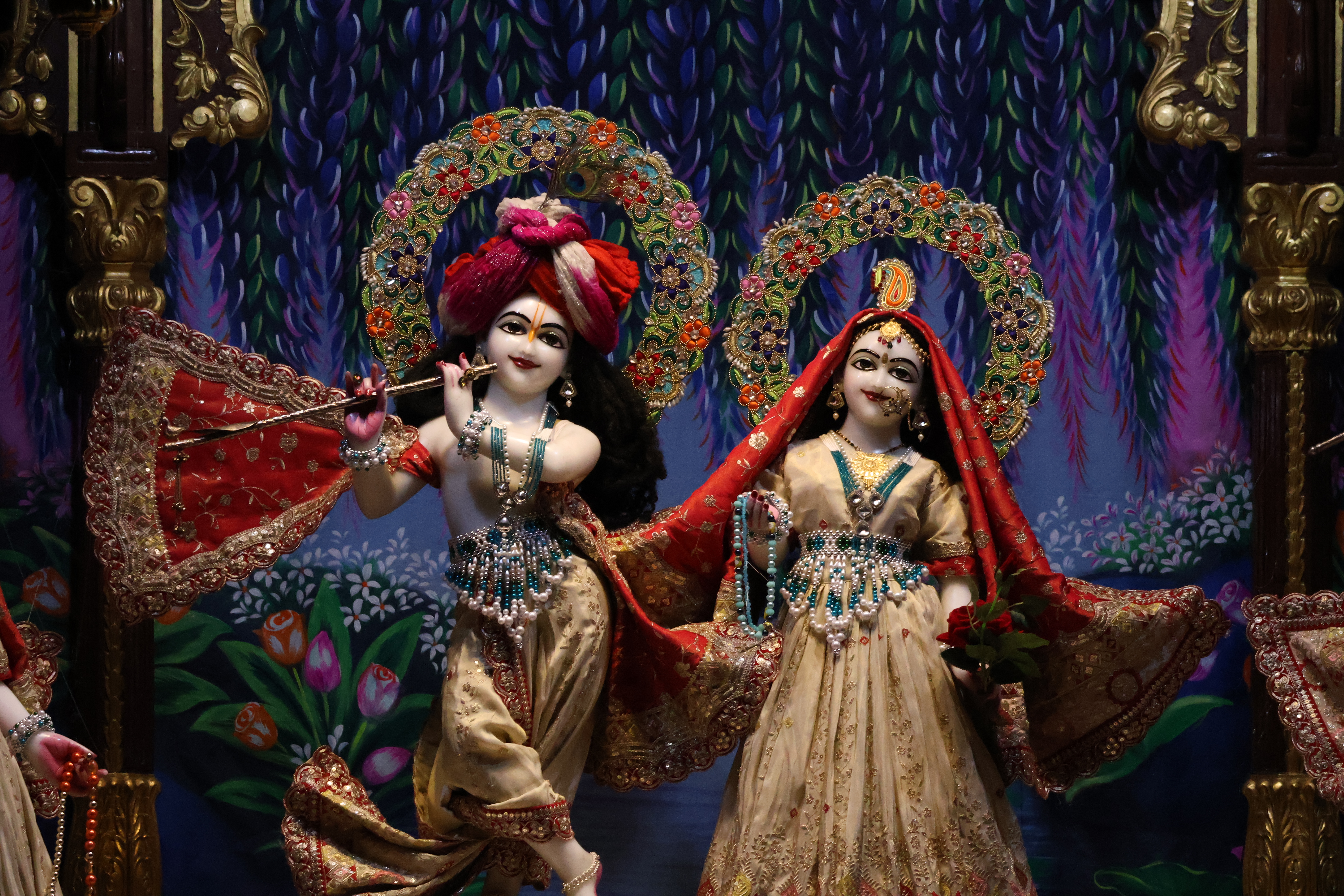
Vaishnava Philosophy
Our Philosophy
The Hare Krishna Movement presents Sanatana culture through the timeless wisdom of Bhagavad-gita and Srimad-Bhagavatam.
The Hare Krishna Maha-Mantra
Hare Krishna Hare Krishna
Krishna Krishna Hare Hare
Hare Rama Hare Rama
Rama Rama Hare Hare
This transcendental sound vibration is the recommended spiritual practice for this age of Kali. Chanting these names of God cleanses the heart, awakens love for Krishna, and is available to everyone — regardless of background, caste, or belief.
ISKCON Philosophy
The International Society for Krishna Consciousness is a Gaudiya Vaishnava organization based on the teachings of Bhagavad-gita and Srimad Bhagavatam. Through temples, festivals, and scripture distribution, ISKCON has worked to share Sanatana culture globally.
Lord Krishna spoke the timeless wisdom of Bhagavad-gita to Arjuna. Lord Chaitanya Mahaprabhu later appeared to spread devotion through chanting, and Srila Prabhupada carried that mission worldwide in modern times.
What once appeared difficult for modern society becomes clear when approached through the process of bhakti-yoga — hearing, chanting, and applying scriptural wisdom in daily life.
The Soul (Atma)
aham brahmasmi — I am spirit soul. The Vedas teach that we are not these material bodies, but eternal spiritual beings. The body is like a garment that the soul wears for a lifetime.
Key Concepts
Atma (Soul)
Paramatma (Supersoul)
Brahman (Spiritual Energy)
Bhakti (Devotion)
Karma (Action & Reaction)
Dharma (Duty / Righteousness)
Moksha (Liberation)
Prema (Pure Love of God)
Seven Purposes of ISKCON
Srila Prabhupada established ISKCON in 1966 with seven explicit purposes, registered as part of the Society's founding documents.
1
To systematically propagate spiritual knowledge to society at large and to educate all peoples in the techniques of spiritual life.
2
To propagate a consciousness of Krishna, as it is revealed in the Bhagavad-gita and Srimad-Bhagavatam.
3
To bring the members of the Society together with each other and nearer to Krishna, the prime entity.
4
To teach and encourage the sankirtan movement, congregational chanting of the holy names of God.
5
To erect for the members and for society at large, a holy place of transcendental pastimes, dedicated to the Personality of Krishna.
6
To bring the members closer together for the purpose of teaching a simpler and more natural way of life.
7
With a view towards achieving the aforementioned purposes, to publish and distribute periodicals, magazines, books and other writings.
Four Regulative Principles
Devotees in the Hare Krishna tradition follow four regulative principles that form the foundation of a sattvic (pure) lifestyle.
No Meat Eating
Ahimsa — non-violence — is foundational. Refraining from meat, fish, and eggs keeps the body and mind clean for spiritual practice.
No Intoxication
A clear mind is essential for bhakti. This includes abstaining from alcohol, tobacco, recreational drugs, and even caffeine.
No Illicit Sex
Engaging the senses in the service of Krishna rather than gratification helps cultivate self-control and spiritual advancement.
No Gambling
Keeping the mind free from unnecessary agitation and distraction allows one to focus on spiritual practice and service.
Key Spiritual Texts
ISKCON's teachings are based on a rich tradition of Vedic scripture and commentaries.
Bhagavad-gita As It Is
The essential dialogue between Lord Krishna and Arjuna, covering yoga, devotion, knowledge, and the nature of the soul. The most direct introduction to Krishna consciousness.
Srimad-Bhagavatam
The "ripened fruit of all Vedic literature." Twelve cantos exploring the nature of the Supreme, devotional service, and the pastimes of Krishna.
Sri Chaitanya-Charitamrita
The life and teachings of Sri Chaitanya Mahaprabhu, who appeared in the 15th century to spread the Hare Krishna maha-mantra to every town and village.
Nectar of Devotion
A comprehensive guide to bhakti-yoga — the science of devotional service — covering the 64 items of devotional practice.
Begin Your Journey
The best way to understand Krishna consciousness is to experience it. Visit the temple, attend a program, chant the maha-mantra, and taste the difference.